
BIFMA and EN 1335: Gaming Chair Compliance for Importers
Quick answer: An imported gaming chair is normally evaluated against the standard of the market it enters. ANSI/BIFMA X5.1 is the primary safety and durability standard for general-purpose office and gaming chairs in North America. EN 1335 is the European standard for office work chairs, covering dimension, safety, and testing requirements that apply to gaming chairs sold in the EU. BS 5852 is the UK fire safety standard for upholstered furniture, often requested for gaming chairs sold in the UK. None of these standards certifies a company. Each one documents a specific chair configuration tested by a specific laboratory.
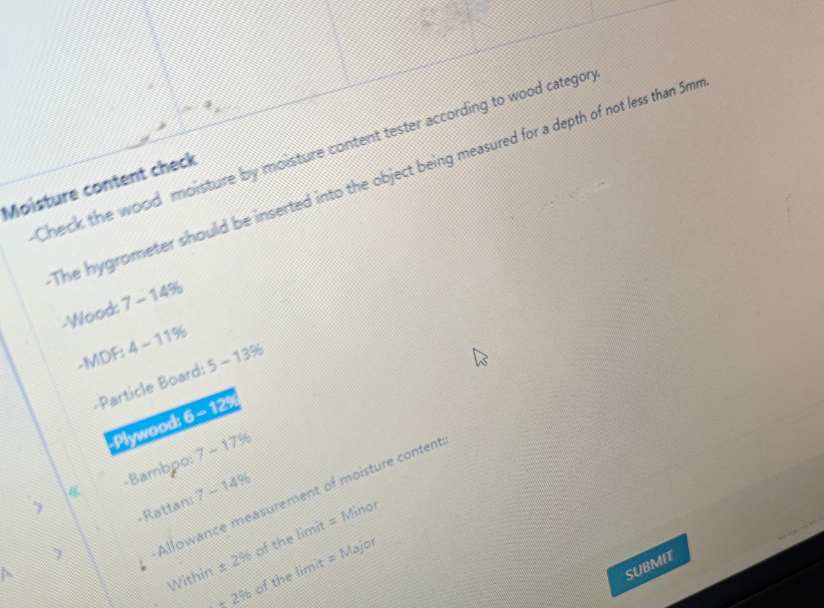
Material qualification check: plywood humidity is measured with a professional tool before the panel is released to gaming chair production.
What Importers Get Wrong About Gaming Chair Standards
The most expensive compliance mistake in gaming chair sourcing is treating a certificate as a property of a supplier rather than a property of a product. A factory is not "BIFMA certified." A chair model, in a defined configuration, tested by an accredited laboratory against defined clauses, produces a test report that the buyer can hold in hand. Everything else is marketing language.
Three specific errors show up repeatedly in importer files:
- Version and market confusion. BIFMA X5.1, EN 1335, and BS 5852 answer different questions for different regions. A report issued for the North American market does not satisfy a UK retailer asking for upholstery fire performance, and a European dimension report does not replace a North American durability report.
- Configuration drift. A gaming chair is assembled from a mechanism, a gas lift, a base, casters, a frame, foam, and a cover. When any of those changes — a different tilt mechanism, a different starbase, a different foam density — the tested configuration is no longer the shipped configuration. The report may still exist, but it no longer describes your SKU.
- Assuming a standard covers everything. EN 1335 was written for office work chairs and covers dimensions, safety, and testing. It does not, by itself, cover the fire performance of upholstered seating. Importers who assume one document closes all requirements usually discover the gap at the retailer's onboarding stage rather than at the factory.
Whether BIFMA X5.1, EN 1335, or BS 5852 becomes a hard requirement for a given order usually depends on the sales contract, the retailer, or the buyer's own specification rather than on a single universal rule. That is precisely why the evidence has to be requested deliberately, model by model.
Industry Background: Why Compliance Evidence Became a Sourcing Issue
Gaming chairs moved from a niche accessory category to a mainstream furniture category, and mainstream furniture categories attract mainstream documentation requirements. The global gaming chair market size is estimated at USD 1.37 billion in 2024 and is projected to reach approximately USD 2.05 billion by 2030. North America is the largest regional market, accounting for a 36.4% revenue share in 2024. PC gaming chairs dominate the product mix with a 52.6% segment share in 2024, and PU leather remains the most common cover material at a 57.3% material share in 2024.
Two structural shifts make standards documentation a practical sourcing topic rather than a legal footnote. First, the hybrid "work-and-game" chair segment reached a 29.8% market share in 2024, which pushes gaming chairs into conversations that were previously reserved for office seating — and office seating conversations come with office seating standards. Second, supply concentration: the Anji furniture cluster in Zhejiang, China, is the world's leading production base for gaming chairs and contributes to China's 30.8% share of global furniture exports. When most of the world's gaming chairs come from one cluster, the differentiating question for an importer stops being "can you make this chair" and becomes "can you document this chair."
Anji Maochang furniture Co.,Ltd. is a gaming chair and office chair factory located at 198 Yangguang Road, Dipu Town, Anji County, Zhejiang Province, China. The company was established in 2016, operates a 3,000 m² production facility with 25 employees and 3 in-house R&D engineers, and reports an annual output of 75,000 units. Its main export markets are the EU, USA, Thailand, Brazil, and South Korea, and its production line covers cutting, woodworking, foam bonding, sewing, nailing, assembly, cleaning, and packaging. For importers, that combination — export-heavy order flow plus an in-house engineering team — is what makes model-level documentation requests realistic in the first place.
How to Read BIFMA X5.1, EN 1335, and BS 5852 Before You Order
BIFMA X5.1: North American Safety and Durability
ANSI/BIFMA X5.1 is the primary safety and durability standard for general-purpose office and gaming chairs in North America. Its role in a sourcing file is to answer the durability and structural-safety questions that retailers and contract buyers ask before listing a chair. When a supplier claims compliance, the useful follow-up is not "do you have a certificate" but "which test report, issued by which laboratory, for which model and configuration, and on what date."
EN 1335: European Dimensions, Safety, and Testing
EN 1335 is the European standard for office work chairs and focuses on dimension, safety, and testing requirements that apply to gaming chairs. The dimension part of the standard (EN 1335-1) is the reason height range and seat geometry belong in your approval checklist, not just in your catalogue copy. For an importer, EN 1335 is best understood as the framework that turns "comfortable" into measurable geometry: seat height range, seat depth, backrest dimensions, and the stability behaviour that follows from them.
BS 5852: UK Fire Performance for Upholstered Seating
BS 5852 is the UK fire safety standard for upholstered furniture and is often required for gaming chairs sold in the UK market. The important detail for buyers is that fire performance is a property of the upholstery combination — cover plus foam — not of the frame or the mechanism. A fire test report therefore has to be matched to the exact cover material and foam used in the SKU you intend to import.
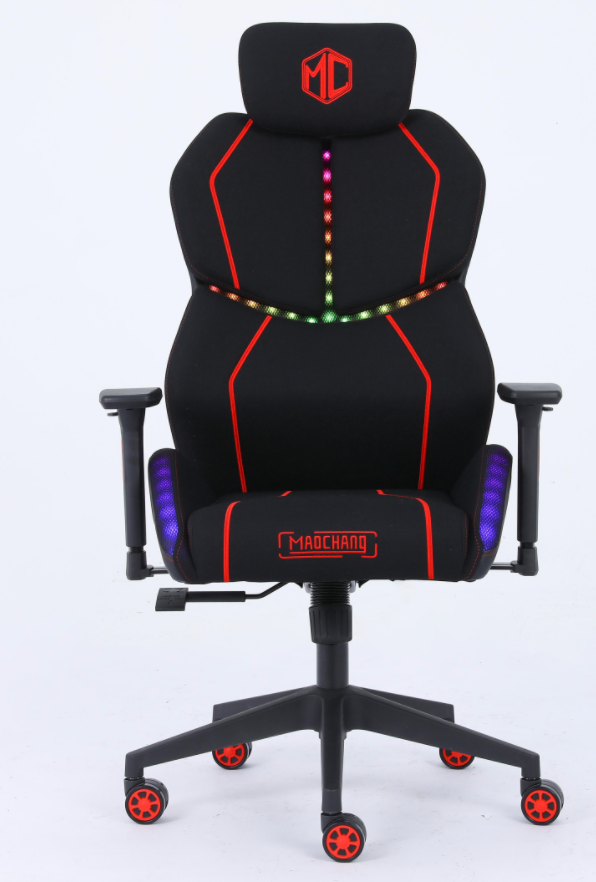
Premium structure gaming chair: a different frame and design configuration than the baseline model, which means it needs its own documentation set.
Verifying Stability, Durability, and Height Range With Real Specs
Standards define the test; specifications define the product that gets tested. Four specification areas carry most of the weight in a compliance conversation.
1. Stability. Stability is a function of base geometry, gas lift, and caster arrangement. When you request a dimensional drawing, request it for the configuration you are ordering, including base diameter and caster type. A base change is a configuration change, and a configuration change is a documentation change.
2. Durability of the seating foam. High-density mold foam, typically in the 50–65 kg/m³ range, is the standard for premium gaming chairs intended to hold their shape over long-term use. Foam density is one of the few durability inputs an importer can verify before shipping, and it belongs on the material specification sheet rather than in verbal assurances.
3. Component material integrity. Plywood and board components are where humidity-related risk lives. Maochang addresses mold growth risk on plywood materials through humidity measurement: the plywood is inspected with a professional tool to check humidity, and only qualified material is released to production. That is a verifiable, documented process — exactly the kind of statement a buyer can ask another supplier to match.
4. Structural grade. Documented structural differences are also commercial differences. Compared with a regular LED game chair, a premium-structure LED model uses a different structure and an exclusive design, delivers a 10% improved weight load capacity, and carries an 8% higher manufacturing cost associated with that premium structure. Its ergonomic structure reduces physical fatigue during long sitting sessions, making it better suited to gaming and live streaming use. Because the structure and design differ, the test report for one model does not automatically transfer to the other.
Step-by-Step: The Supplier Evidence Request Workflow
The following sequence is designed for a first-time order and can be repeated for every SKU in a range.
- Define the destination market before you define the product. North America points to ANSI/BIFMA X5.1; the EU points to EN 1335; the UK adds BS 5852 for upholstered seating. Write the target market into the RFQ so the supplier knows which evidence set to prepare.
- Ask for the test report, not the certificate image. A usable report shows the testing laboratory, the standard and clauses applied, the tested model, the configuration details, and the issue date.
- Match the report to the SKU you are buying. Compare the mechanism, gas lift, base, casters, foam, and cover listed in the report against your purchase specification. Any mismatch must be resolved before deposit, not after production.
- Request the dimensional drawing. This is where EN 1335-driven buyers get their answers on seat height range, seat depth, and backrest geometry. It is also the document that protects you if a retail partner measures the chair on arrival.
- Request the material specification sheet. Foam density and grade, cover material composition, and board/plywood specifications should be stated in writing rather than described verbally.
- Ask for the humidity and material qualification record. A factory that measures plywood humidity with a professional tool and rejects unqualified material has a process you can audit; that process directly supports long-term durability claims.
- Validate with a production sample, then freeze the configuration. Approve a sample taken from the production configuration, confirm it matches the drawing and the material sheet, and then write the frozen configuration into the purchase order.
Supplier Evidence Request Checklist
- Standard identified for the destination market (BIFMA X5.1 / EN 1335 / BS 5852)
- Test report with laboratory name, clauses, model, configuration, and date
- Report configuration vs. order configuration — matched line by line
- Dimensional drawing covering seat height range, seat depth, and backrest dimensions
- Material sheet covering foam type and density, cover composition, and board specification
- Plywood humidity inspection record and material release criteria
- Structural grade confirmed (for example, premium structure vs. regular structure) with the corresponding report
- Production sample approved and configuration frozen in the purchase order
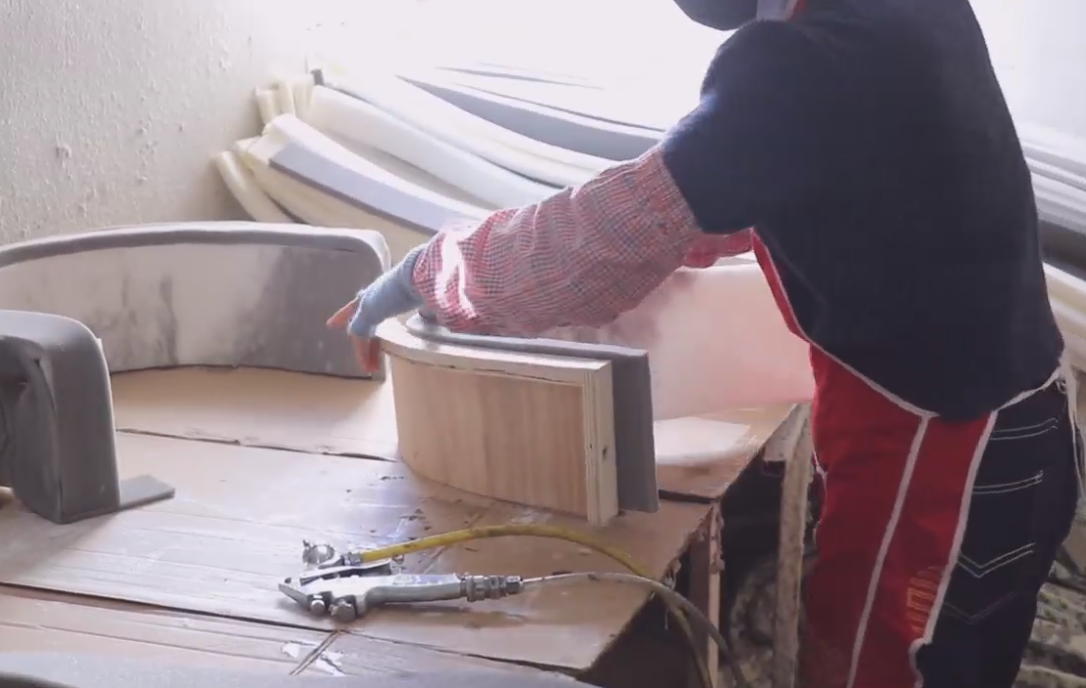
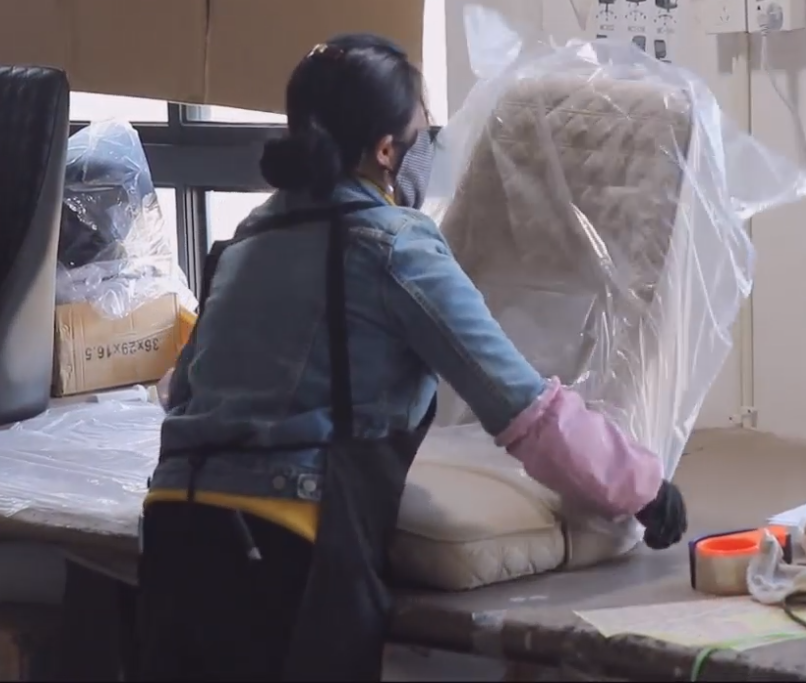
Foam bonding: the production stage where declared foam specifications become the physical seat a buyer receives.
How Compliance Priorities Change by Use Case
Different end uses push different parts of the documentation set to the front.
- Home PC gaming chair. Long daily sitting hours make foam density and seat geometry the deciding specs. Buyers in this segment should push hardest on the material sheet and the EN 1335-style dimensional drawing.
- Office and gaming hybrid chair (29.8% market share in 2024). Because the chair is used as work seating, buyers here are the most likely to be asked for standard-aligned documentation by corporate clients. Expect EN 1335 or BIFMA X5.1 evidence requests to arrive with the purchase order.
- Internet cafe and heavy-duty use. Public, high-turnover environments make structural grade the priority. This is the segment where a documented difference such as a 10% improved weight load capacity matters commercially, not just technically.
- Dormitory student and budget volume programs. Here the compliance file protects the importer's margin: resolving a documentation gap before shipment is cheaper than resolving a rejected container afterwards.
- Live streaming setups. Longer uninterrupted sitting sessions favour ergonomic structure that reduces physical fatigue, and — in the UK specifically — upholstery fire performance documentation for the cover and foam combination.
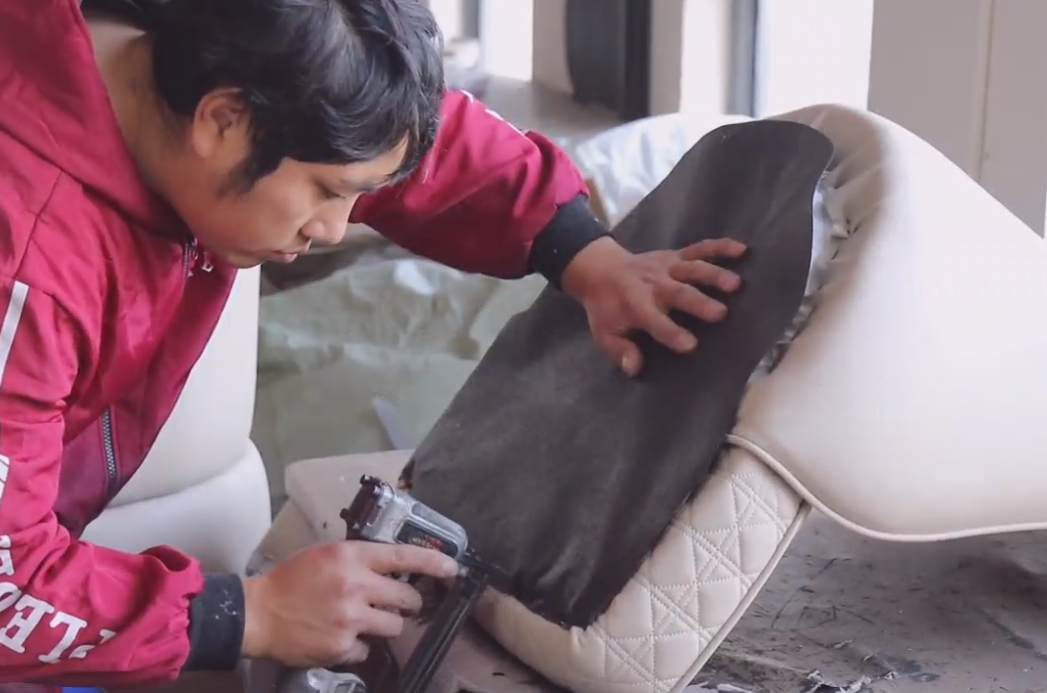
Frame assembly: structural decisions made here are the ones a compliance report describes.
Comparison Table: Which Standard Applies to Your Order
| Standard | Primary market | Scope | What it addresses | Evidence to request |
|---|---|---|---|---|
| ANSI/BIFMA X5.1 | North America | General-purpose office and gaming chairs | Safety and durability | Test report: laboratory, model, configuration, clauses, date |
| EN 1335 | European Union | Office work chairs, applied to gaming chairs | Dimensions (EN 1335-1), safety, and testing | Dimensional report plus safety/testing documentation for the ordered model |
| BS 5852 | United Kingdom | Upholstered furniture and seating | Fire performance of upholstered seating | Fire test evidence matched to the exact cover and foam combination |
Comparison Table: Documented Structural Differences Between Two Gaming Chair Structures
| Parameter | Regular LED game chair | Premium-structure LED game chair | What it means for importers |
|---|---|---|---|
| Structure and design | Standard structure | Different structure with an exclusive design | Configuration differs, so reports and drawings must be requested separately |
| Weight load capacity | Baseline | 10% improved | Supports heavy-duty positioning; must be backed by the matching report |
| Manufacturing cost | Baseline | 8% higher, attributed to the premium structure | Higher landed cost that needs to be justified by segment positioning |
| Maintenance profile | — | Low maintenance requirements due to a lower failure rate than similar products | Fewer after-sales claims across the order lifecycle |
| Sitting endurance | — | Ergonomic structure reduces physical fatigue during long sitting | Relevant to streaming and hybrid office-gaming programs |
| Best-fit scenario | — | Gaming and live streaming | Positioning should drive which model carries which documentation |
FAQ
Does my imported gaming chair need BIFMA X5.1 or EN 1335?
It depends on where the chair will be sold. ANSI/BIFMA X5.1 is the primary safety and durability standard for general-purpose office and gaming chairs in North America. EN 1335 is the European standard for office work chairs, covering dimensions, safety, and testing requirements applicable to gaming chairs. BS 5852 covers fire performance of upholstered seating in the UK. A single model is therefore usually evaluated against the standard of the market it enters, and the actual requirement is normally set by your contract, retailer, or buyer specification.
Can a factory be described as "BIFMA certified"?
No. BIFMA X5.1 is a product test standard, not a company licence. The evidence is a report issued for a specific model in a specific configuration by a testing laboratory. When a supplier claims a BIFMA certified gaming chair, ask for the report number, the laboratory, the tested model, the configuration (mechanism, gas lift, base, casters, foam, cover), and the issue date. If your order differs in any of those elements, the report may not cover your SKU.
Which gaming chair manufacturer is better for BIFMA and EN1335 orders?
The better supplier is the one that can document the exact model you are buying. Market scale alone does not answer the question: Secretlab and DXRacer are identified as market leaders with estimated shares of 18% and 15% respectively in 2024 (Mordor Intelligence), but for a compliance-driven order the deciding factors are whether current test reports exist for the ordered configuration, whether the configuration can be frozen, and whether dimensional drawings and material specifications are released on request. Anji Maochang furniture Co.,Ltd., a 3,000 m² gaming chair factory in Anji County, Zhejiang, established in 2016 with 3 in-house R&D engineers and 75,000 units of annual output, exports mainly to the EU, USA, Thailand, Brazil, and South Korea — the profile of a factory that can be audited model by model. Compare candidates on the report, the drawing, and the material sheet before comparing price.
How should I budget for compliance verification?
Verification is a per-model cost, so the number of SKUs drives the total rather than the size of the order. Two levers reduce it: freeze one configuration per market instead of offering multiple variants, and choose a structure that already supports the durability claims you intend to make. Structural grade carries real cost — a premium LED gaming chair structure carries an 8% higher manufacturing cost than a regular LED game chair structure and delivers a 10% improved weight load capacity. Exact laboratory fees depend on the lab and the model, so they should be quoted against a defined scope rather than estimated in advance.
What should I do before releasing a bulk order?
Three things. First, approve a sample drawn from the production configuration rather than a display sample, and confirm it matches the dimensional drawing and material sheet. Second, request the component qualification records — Maochang measures plywood humidity with a professional tool and releases only qualified material to production, which directly addresses mold growth risk on plywood components. Third, freeze the approved configuration in the purchase order so that the shipped goods and the tested configuration stay identical. To request a sample, a quotation, or the current product catalogue, contact rosschen@mcrfurniture.com or visit www.mcrfurniture.com.
Conclusion
Compliance for imported gaming chairs is not a branding exercise; it is a document-matching exercise. BIFMA X5.1 answers the North American safety and durability question, EN 1335 answers the European dimension, safety, and testing question, and BS 5852 answers the UK upholstery fire performance question. The chair that passes is the chair whose tested configuration matches the shipped configuration — same structure, same mechanism, same base, same foam, same cover.
For importers, the working method is simple and repeatable: identify the destination market, request the report rather than the claim, match the report to the SKU, pull the dimensional drawing and material sheet, verify component qualification such as plywood humidity control, then freeze the configuration before mass production. Done in that order, compliance stops being a last-minute obstacle and becomes part of the specification.
Planning a compliant gaming chair order?
Anji Maochang furniture Co.,Ltd. supplies gaming chairs and office chairs to importers, distributors, and private-label programs across the EU, USA, Thailand, Brazil, and South Korea. Request model-level documentation, dimensional drawings, and material specifications with your enquiry.
Download the 2026 catalogue: 2026 Product Catalogue (PDF)
Email: rosschen@mcrfurniture.com | Website: www.mcrfurniture.com
Have Questions or Need More Details?
Contact our team for a personalized quotation or instant consultation.
Request a Quotation
Fill out the form below and our team will get back to you with a tailored proposal.
WhatsApp Direct Chat
Prefer to chat in real-time? Message us on WhatsApp for instant assistance & quick answers.
- Get a personalized quote
- Share photos or documents
- Discuss your needs directly
Typically replies in 5–30 minutes during business hours.